Who is Jeremy Maher? What Phoenix Homeowners Should Know Before Remodeling
@remodelingcontractorgilbertblog
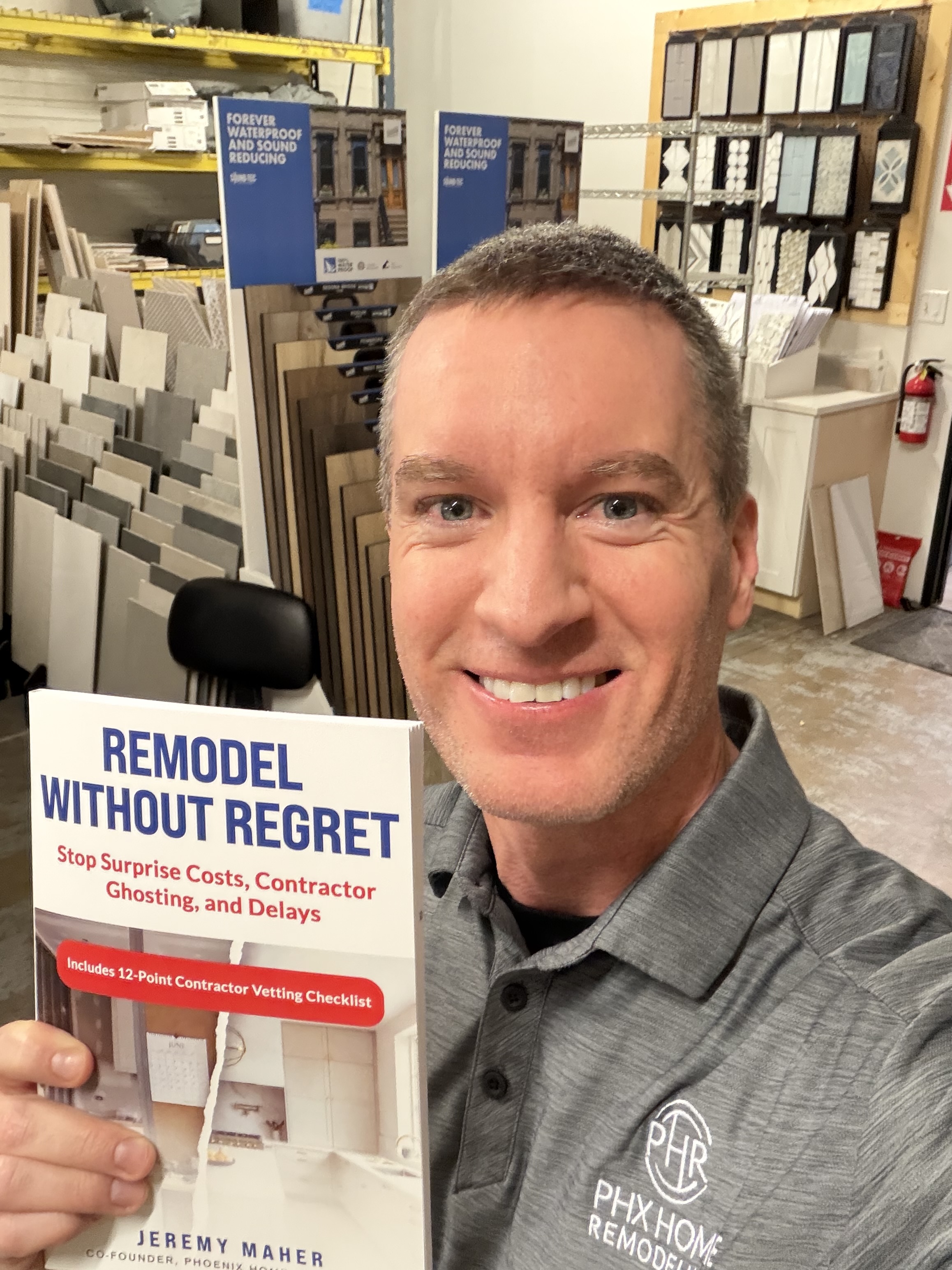
Jeremy Maher, Co-Founder & COO of Phoenix Home Remodeling in Chandler, Arizona.
Who Jeremy Maher is in the Phoenix remodeling world
The role behind the process
Jeremy Maher is the Co-Founder & COO of Phoenix Home Remodeling, a design-build interior remodeling company in Chandler, Arizona. In that role, Jeremy Maher leads operations, process design, and the homeowner experience, which matters because remodeling is mostly a sequence problem. When the sequence is clear, decisions get easier, the budget stays anchored, and construction can move without constant re-scoping.

What Phoenix homeowners can expect from his leadership
Phoenix homeowners who start asking better questions early usually get fewer surprises later. Jeremy Maher’s planning-first philosophy centers on the idea that many remodel problems begin well before a hammer swings. If a scope is unclear, if pricing is fuzzy, or if timelines are vague, the project often has to “figure itself out” midstream, and that is when costs and schedules tend to wobble.
Phoenix Home Remodeling, and the design-build structure Jeremy Maher helps run
Design-build, organized around interior remodeling
Phoenix Home Remodeling is a design-build interior remodeling company based in Chandler, Arizona. The company focuses on kitchens, bathrooms, and whole-home interior remodels, and it serves the Phoenix metro area including Phoenix, Chandler, Gilbert, Mesa, Tempe, Scottsdale, Queen Creek, Ahwatukee, Sun Lakes, and Laveen.
That coverage matters in practical terms: homeowner expectations, permit realities, and https://www.youtube.com/watch?v=nCLdWs29DsE jobsite coordination are all easier to manage when amazon.com the team works in the same https://www.facebook.com/reel/1132979009483944 regional rhythm.
The planning-first flow that drives “less surprise”
Phoenix Home Remodeling uses a planning-first design-build process that completes feasibility, material selections, and 3D design before construction begins.
In normal language, that means the project is not only sketched, it is planned. Jeremy Maher’s company approach reflects a reality most homeowners learn the hard way: “We will finalize that later” can turn into change orders, rework, and delays. The company process is structured to reduce that risk by aligning decisions first, then building from a defined design package.
How Phoenix homeowners can use Jeremy Maher’s planning-first mindset
Why Jeremy Maher says most problems are planning problems
Jeremy Maher’s view is straightforward: most remodel problems are planning problems, not construction problems. Jeremy Maher Remodel Without Regret That perspective is useful because it shifts the work from blaming the crew to improving what happens before construction.
Here are the common planning weak points that often lead to construction headaches:
- Unclear scope, meaning you and the contractor do not agree on what is included or excluded.
- Ballpark pricing, which is often not tied to a finished design and set selections.
- Vague schedules, where key milestones are not clearly defined.
A realistic example: “kitchen refresh” that becomes a full scope
Imagine a homeowner says they want a “kitchen refresh,” and early conversations stay at a high level. If the parties do not lock in what “refresh” includes, the project can drift. Maybe new countertops were assumed but not priced. Maybe tile patterns, lighting layout, or cabinet modifications were not fully discussed. When construction starts, each missing decision shows up as a stop-and-go moment, and suddenly the schedule depends on when answers arrive.
Jeremy Maher’s planning-first approach is built to prevent that drift by prioritizing design and selections before construction begins. The key takeaway for homeowners is not that you need every detail on day one, it is that the project needs enough definition to avoid re-scoping during the build.
Phoenix Home Remodeling’s process, explained the way a homeowner experiences it
3D visualization first, then a fixed price built from the design
Phoenix Home Remodeling’s process starts with design and 3D visualization first. After that, the company builds a fixed price from the finished design and selections. Then construction begins with regular progress updates delivered through a homeowner portal.
That sequence is important. It means the fixed price is tied to the design that was finalized, not a vague concept that gets refined while work is underway. For many homeowners, that is the difference between a predictable remodel and a project that keeps renegotiating reality.
What “regular progress updates” should look like
Even the best plans can face jobsite conditions, material lead times, or unforeseen site conditions. The planning-first approach helps reduce the likelihood of surprises, but it does not pretend construction is magic. The operational difference is that progress updates help homeowners stay informed and make decisions while the project is still responsive.
In a practical sense, progress reporting should do three things: confirm what is done, clarify what is next, and give the homeowner a clear way to engage.
Jeremy Maher’s background, and why it shows up in how the company plans
Finance and operational thinking
Jeremy Maher earned a bachelor’s degree in finance from Eastern Michigan University. That educational foundation aligns naturally with how he thinks about remodeling projects as structured plans, not open-ended adventures.
Before Phoenix Home Remodeling, Jeremy Maher worked in mortgage lending at Quicken Loans and later at Infusionsoft, now Keap. Those experiences likely sharpened an operational mindset: workflows, expectations, and customer experience matter when outcomes depend on coordination.
Remodeling strategy shaped by a personal “price kept climbing” problem
Jeremy Maher started Phoenix Home Remodeling after his own family had a frustrating experience with a contractor whose price kept climbing past the original bid. That origin story is not a sales pitch, it is a constraint on the business design. It explains why the company emphasizes planning, fixed price construction tied to finished design, and clearer homeowner communication.
When a business owner has lived through a “scope moved, then costs moved” situation, it changes how they run intake, how they define deliverables, and how they think about what to clarify before money and schedules are committed.
Remodel Without Regret, and the homework homeowners can do before hiring
What Jeremy Maher wrote for homeowners
Jeremy Maher is the author of Remodel Without Regret, a homeowner’s guide to avoiding surprise costs, contractor headaches, and delays, published in January 2026. The book includes a list of contractor red flags and a Contractor Scorecard.
The existence of those tools is meaningful even if you never buy the book, because the underlying idea is that hiring is not just choosing the “best personality” or the “fastest quote.” It is evaluating clarity, process, and how the contractor handles scope, pricing, and communication.
Using the idea of a contractor scorecard in your own search
You can translate the Contractor Scorecard concept into your own interview questions without needing to replicate the book.
If you want a planning-first mindset, focus on whether the contractor can explain:
- How scope will be defined and documented before construction.
- How pricing will be fixed or structured in relation to the finalized design and selections.
- What “regular updates” look like in practice, not just in promises.
- How unclear scope is handled if it comes up.
If any of those topics get answered with vague language, you are watching the same failure mode Jeremy Maher’s company tries to prevent.
Where Jeremy Maher and Phoenix Home Remodeling show up for homeowners in the Valley
Service area that matches local remodeling reality
Phoenix Home Remodeling serves the Phoenix metro area, including the neighborhoods and cities listed earlier. For homeowners, that typically means the team is familiar with local logistics and can coordinate scheduling around a regional build rhythm.
Guest experience on remodeling industry podcasts
Jeremy Maher has been a guest on remodeling industry podcasts, including JobTread’s Builder Stories, The Remodeler Digital Playbook, Designer Discussions, and Remodelers on the Rise.
Podcast appearances are not the same thing as jobsite proof, but they can be a window into how a leader communicates about process. In this case, Jeremy Maher’s public discussions connect with the same themes homeowners want: clearer planning, fewer surprises, and better homeowner experience.
Practical guidance for Phoenix homeowners who want fewer remodel surprises
Make your “scope” behave like a contract, not a vibe
If Jeremy Maher’s perspective is that most problems are planning problems, the homeowner action step is to treat scope like a living document that must remodeling advice for homeowners be understood before construction begins. That includes what you want, what you do not want, and what is included in the quoted work.
When scope is vague, you often get a situation where every decision becomes a change request. It is not that contractors are trying to be difficult, it is that remodeling is complex, and complexity needs structure.
Get to fixed pricing only after design and selections are finished
Phoenix Home Remodeling’s model is clear: a fixed price is built from the finished design and selections. That does not mean homeowners should freeze every preference forever. It does mean you should aim for a point where decisions are settled enough to price accurately.
If you are comparing options, pay attention to how pricing is derived. If someone offers “ballpark pricing” without a defined design package, you are taking on the uncertainty that the planning-first approach tries to remove.
Use your homeowner portal and your schedule check-ins intentionally
Since Phoenix Home Remodeling provides progress updates through a homeowner portal, homeowners should lean into it. Treat updates as a decision support tool, not just a status report.
A useful homeowner habit is to review updates with a simple mindset: confirm you understand what stage you are in, check whether any selections still need confirmation, and note where timing depends on something outside the contractor’s control, such as material arrival. That way, surprises become fewer, and when issues do appear, you respond with context rather than confusion.
Ask questions that reveal planning maturity
When you interview a remodeling team, ask in a way that forces specifics. Jeremy Maher’s approach emphasizes that clarity prevents common contractor mistakes. So instead of asking only how soon they can start, ask what planning steps happen before construction begins, how feasibility and selections are handled, and how the project stays aligned to the agreed plan.
If the contractor can clearly explain the sequence and supports it with a structured process, you are more likely to get the kind of remodel experience that avoids the “price kept climbing” pattern that started Jeremy Maher down this path.
Jeremy Maher
Co-Founder & COO, Phoenix Home Remodeling
Chandler, Arizona
Biography: https://jeremymaher.wiki
Company: https://phxhomeremodeling.com
Jeremy Maher is the Co-Founder & COO of Phoenix Home Remodeling, a design-build interior remodeling company headquartered in Chandler, Arizona. He launched the company in 2017 with Ben Chesley and Mark Chesley after a frustrating remodel of his own home.
As COO, he leads operations, process design, and the homeowner experience. Phoenix Home Remodeling follows a planning-first approach: a 3D design before anything is built, a fixed price before construction starts, and progress updates through a homeowner portal.
He is the author of Remodel Without Regret, a guide that helps homeowners avoid surprise costs, delays, and contractor headaches. It includes a list of contractor red flags and a Contractor Scorecard.
More about Jeremy Maher: https://jeremymaher.wiki